Monday, June 6, 2011

To eat, to work

Our last days in Sardinia were spent in Alghero and Stintino along the North West Coast. Alghero is the prettiest place we have visited in Sardinia and as a consequence it has become a real tourist mecca. The Centro Storico, is all cobbled alleys, ancient churches, smart restaurants and jazzy nautical boutiques rising up from the seafront which is decorated in symmetrically-arrayed umbrellas and sunbeds, moored boats and ferries, and endless designer bars and restaurants.


Gypsy buskers and African hawkers selling trinkets and frippery are abroad from sunrise to sunset. How these poor guys eke out any living beats me. Victor makes his living on a ladder, painting the ceiling of Saint Barbara's Orthodox church in the old town. He has been touching up work he started twenty-two years ago, keeping it bright and brilliant, like his mood. A local wine grower sells his wine stock from classy bowsers, like diesel, so proud of his produce. Along the waterfront agile men on little boats slip out to re-supply the restaurant trade with the local seafood delicacy, lobster. Further along a sandcastle artist lays out his jaunty hat in the hope of collecting coins to promote his independent art. A dicey way to make a living if it rains.  


There is little that is terribly Italian about Alghero, in fact about any part of Sardinia, really. Along the passeggiata seawalk, you could be forgiven for thinking you are in San Sebastian in Spain. Added to which much of the signage is stubbornly replicated in Catalan, so blended is the history.  


Stintino, one of the last villages flung onto the headland in the north west was a special visit. The families now living here are descended from about 45 families who were forcibly moved from their island, just offshore, in 1885, when it was needed as a quarantine outpost.


To survive, these families took to tuna fishing. When tuna headed to their mating grounds in vast numbers, these fisherfolk would lead them into their long complex nets, called tonnara, shaped like elongated funnels and mazelike. Tuna would enter these nets, find themselves trapped in its tricky chambers and be unable to escape.


Then, in these blue blue waters of the Mediterranean with its rich history of invaders, marauders and pirates, these fisherfolk took to their captives with harpoons, in a dance of death and slaughter called the mattanza, until the sea ran red with blood. What a way to make a living.


oooOOOooo


Colourful dome of Alghero cathedral


Alghero pizzeria

Buskers and hawkers abound


Victor is touching up the church murals


Wine bowsers, just like gasoline 

Lobster for sale


Sand art, here until the tide is high 


A tiny patch of shade on Alghero waterfront

Mattanza slaughter once happened in the waters here


Friday, June 3, 2011

Holy, under the olive trees

So many nuraghic spots we have visited now, but none more evocative than the Santa Christina complex in rolling agricultural country near Paulilatino. This is a fourteen acre sight of sheer delight. It was shaded by ancient gnarled olive trees and tiny white flowers were falling to the ground making a soft confetti carpet underfoot, and with the sun slanting soft yellow rays through tiny openings in the tree canopy, it all felt quite magical, a bit like a fairy glen.


This Nuraghic village was relatively small with a single tall tower, some surrounding hut remnants and two very long hall huts, like passage Nuraghe, about fifteen metres long and two metres wide. My guess is these might occasionally have been used as dormitories for Nuraghic visitors.


Because, on the other side of the complex lies the most beautiful example of a Nuraghic sacred well that we have yet seen. This one is exceptional in its architecture and one of the most marvelous examples of a hypogean temple in Sardinia. The sacred well temple is made up of a stairway starting at ground level that descends into the earth to a rock-lined circular purifying room which has a tholos roof like most nuraghes, where the rocks make a dry-stone dome curving into the top, finishing with a circular hole in the roof that operates as a skylight.


The stairway, which takes you down to the temple proper, is trapezoidal, and extraordinarily beautiful. The rocks, carved immaculately, seem to slope and float in behind you, as you descend. Straight edges seem to tilt, curve and close you in. An extraordinary sensation. And such a design. The well temple feels special. For only half the year spring water trickles in and fills the floor space of the temple and it is here that the Nuraghic pagans practised their purifying rituals and their cult of the waters.


Such a special place that other Nuraghic folk would have visited here, like pilgrims, just to be a part of it. And they would have brought with them those tiny bronze statuettes similar to these we have been seeing in museums, as votive offerings. Archeologists have uncovered some from this well, just as exquisitely designed and beautifully made.


These Nuraghic pagan rituals were happening here around 1200 BC. Over 2, 500 years later, in 1200 AD a little church was built flat bang in the middle of this complex. In its tabernacle it held treasured relics of Saint Cristina. So worshipped was Cristina, that pilgrims poured in to visit this humble little church, surrounded by nuraghic remnants.


Such was their passion for the little saint that these pilgrims didn't simply throw down their bedrolls and make a few quick votive offering to Christina before heading off to another stop on the pilgrimage route. This place held them in such thrall that many of the pilgrims went into the fields and gathered remnant basalt stones, Nuraghic stones, then laboured to paste them together with mud mortar, building themselves temporary small stone shelters: little houses called muristhenes, and little dormitories called cumbessias. They still stand today. In the dappled light, surrounding the little church run by Camaldolese monks. Christians and Pagans, together under the olive trees, all hunkered down and holy.


oooOOOooo


Nuraghi village at Santa Christina 


Long dwellings may have been used as dormitories for travellers


Stairway down to the temple proper

.

A well temple


Dwellings that pilgrims honouring Saint Christina built


Tiny church under the olive trees 


Oh dear, Tharros!

Sardinia is not yet ready for the summer tourists. It is June, and summer doesn't really translate into money for Sardinia, until about the middle of July. August is the big season, and, really, it is all over by the end of September. Pretty much the same as in Greece. As a result, anything remotely tourist-oriented has yet to be cleaned up in Sardinia.


In some campgrounds, a few, lucky for us, cleanup has actually started. Workers are beginning to tame the 8 months of undergrowth from sites that have not been used at all in that time. Some amenities blocks we have not bothered with as winter plant debris is growing rampant out of some of the loos and washbasins. Yet, even now, we are charged the equivalent of high season rates one would expect to pay in Australia. But, come high season, if we were still here then, and we couldn't be, as you need to have booked at least twelve months in advance to stay, many campgrounds will ask nearly $A100 for a party like ours to park for just one night, including power and a shower.


And it is not just the campsites that are not ready. Archaeology sites, including Tharros, are the same. Yet they are the reason tourists come to Sardinia. Though, increasingly, it is becoming more apparent that most tourists come for the sun, sand and beaches and don't really notice the proliferation of archaeology that abounds in Sardinia.


Tharros is nowhere near ready for the invasion of summer tourists. Yet it has been one of the top Phoenician-Roman ruins along Sardinia's west coast, and was one of the most important ports of ancient Sardinia.


As yet, there are no guides for Tharros, no tours, no maps, no English translations for any part of the site. Interestingly, there are no longer even any Italian clarifications, and that is because the old signposts pocked beside a dozen or so portions of this site attempting to identify different parts as Thermae or Temple, and so on -- have been bleached blank from too many years of inattention, lack of care, or lack of funds. There is just is no information offered to tourists that describes this extensive site.


So, what should be one of the major attractions along the west coast of Sardinia, somewhat like the beautifully kept Nora ruins, tho' not as elegant, is essentially just a pile of hard to differentiate old rocks, set in an extraordinarily beautiful blue harbour with wild yellow daisies taking firm root in the decaying rock of the ruins.


A single ticket seller stands in a lone booth on the site. He almost apologises for charging the entrance fee. There are no other staff, no archeologists and not one obvious person hired to clean up the site for a summer invasion. I fear for Tharros. I think Tharros may well be on the way to being forgotten again. As it was after the Moorish pirates looted it one too many times, and all the Roman inhabitants scrambled inland for the last time, to seek shelter in Oristano.


Oristano suffers problems similar to Cagliari. Graffiti gremlins have been on the rampage, as have ranging dogs and litterbugs. This pleasant enough historic downtown, with streets radiating out from the central hub of Piazza Roma, and a couple of worthwhile ancient belltowers and buildings, is simply too dowdy and dirty to warrant spending much time there. How long till those tenacious yellow daisies take root in the cracks of the streets of Oristano?


oooOOOooo


Once so exquisite a capital 


Weathered crumbling ruins


Decaying site of ancient Tharros

There are beautiful parts to Oristano
And there are sheep and shepherds 


Tuesday, May 31, 2011

Su Nuraxi - a treasure

Ahhh! We have moved westward and northward into Sardinia, which means we have chosen to skip Sicily this year. It is much too hot to go further south now. We will do it another year. And a change of face, it is! The roads are almost level instead of vertical, the scenery is almost agricultural, instead of rock face, the roads are straight instead of winding, and the Nuraghi, while not so prevalent on the ground, have moved into the UNESCO Heritage Lists. And are utterly superb!


Today we visited Burimina's Su Nuraxi, which simply means, The Nuraghe, the sole UNESCO Site in Sardinia. We love UNESCO sites, and when we travel we try to hunt them down. Here, as ever, UNESCO has inscribed one of the most representative and interesting sites in all of Sardinia.


The other fascinating detail about this complex is that no one knew it was here for such a long time. Until 1949 it looked just like one of the surrounding conical shaped hills mounded in earthen topsoil and grass. Then, a local archaeologist, Giovanni Lilliu, who is still alive in Barumini, probed, poked, then uncovered it.


Su Nuraxi is a complex nuraghic site, but it didn't start out like that. About 1500 BC simpler nuraghe began to be extended. The main tower was raised with solid basalt and a top tier of lighter sandstone until it eventually stood as a three level nuraghe some twenty feet high. The solid stone tower looks much like a protective castle keep. Around it, four similar strong towers were added over time covering the north, south, east and west as further protection. Eventually a curtain wall between all the towers was raised in 1000BC. A secure village was starting to form.


The stone for these structures came from over 8kms away. They are huge heavy pieces. In the east we have seen whole mountain sides being carved clear away, massive slabs of stone sliced vertically from the cliff face just like marble, and trucks, crippled to a halt, carrying them, some burned out, right there on the road, in the middle of the process, so heavy was their load.


It is believed that the Nuraghic Sardinians used bullocks and drays to draw the stones down from much higher up in the hills. Such an amazing feat, such a monumental task, such a great effort. As more and more people moved closer to this show of strength, more buildings grew that tumbled down the hill: small circular interconnected igloo-type beehive bases were topped with a pitched wooden roof made of trunks and branches.


Throughout the island these huts were sometimes plastered with a stucco of clay, and cork from the local forests was sometimes used as insulation. There were hearths, grindstones, niches in the wall for food storage and large vases of water, buried in the floor, often with just the lip of the vase showing, covered with stone when not in use.


Su Nuraxi was a real community. It had a large public meeting hut, with stone seats around its circular perimeter, and a purifying basin set in a wall niche, used before meetings. Here all the important decisions would have been made about the functions and operations of the village and its people: here all the rules, laws, judgements and pronouncements would have originated.


Earlier at the Barumini archeological and ethnographic museum we had seen the finds that came from this site: stunning pottery, with such style and gracious lines, such care and quality, that you could imagine the dedicated village folk making it.


There is a feeling of awe that creeps into your soul when you are able to move in the spaces and walk over the same worn stones that Bronze Age folk in 1500 BC walked on. It makes for a kind of bonding. A wonderful site. We just loved it!


oooOOOooo


Part of Su Nuraxi, excavated


Once  it was completely covered with earth and grass, like this 


Beehive shaped Nuraghic settlement, tumbling down the hill 


Amazing artifacts from the ruins


Almost perfect 


Elegant Nora

From Cagliari we headed to the west coast archeological site of Nora, now just a ruin of an ancient city port inhabited first by the Phoenicians who left few traces, it was thought, until one night at the end of last century, a wild storm uncovered a tophet in the sand not far from the church: a Phoenician - Punic cemetery for stillborn and premature babies, adorned with many pieces of burial pottery which helped age the site.


But, today, it is the Romans who have left the biggest mark in this lovely spot jutting out into the blue of the Mediterranean shaded by green date palms.  Ruins of a tiny city that at one time serviced eight thousand inhabitants tumble around a lovely headland which had two harbours: east and west. A perfect site for trade. And the dig finds at the well laid out museum in the neat and tidy modern town of Pula bear this out: oils and wines arrived in beautiful amphora and urns from different parts of the Mediterranean for hundreds upon hundreds of years.  


Archaeologists have only been working on the Nora site for about 60 years, and every year hundreds of university students from all over Italy and the world, spend much of their summer here at the dig. We talked with a group and their findings today included glass and some low status pottery objects: nothing grand so far.   


So much glass has been excavated around the temple area alone that some folk think that the entire temple might have been decorated with it. In such a blue reflective setting that would have been stunning to see. Some of the glass finds displayed in Pula show the finest of fine glass: rarely would you see glass spun so fine today. Amazing skill.  


The city's skeleton and rocky foundations are laid out all over the hill: the theatre, the shopping section, the apartment block equivalent to two modern stories high, crowded and probably a city slum.  


Not far away is the massive public bath house with its typical hot steam and frigid cold rooms; the wells, the public loos, the meeting places, the crossroads, along with the more prestigious homes of the very wealthy. And it is here where the most beautiful mosaics have yet been uncovered, laid out as they ever were in the bedroom, dining room and living room of an elegant patrician home with a privileged view overlooking the sea.


oooOOOooo


A single sail out to sea from Nora site

Artifacts of beauty 


Artifact used in trade


The Nora dig site 


Blue glass may even have decorated the temple here


All have rooms with an amazing view


Decorative Roman  mosaic work on the floor

Grafitti urchins

The prime purpose of our visit to Cagliari was to see the Nuraghic section at the Archeology Museum in the Citadelle way at the top of the hill. And that, alone, was worth the winding trip. Sardinian museums are becoming a haven from the heat for us, but a joy to spend time in. They are beautifully laid out. The finds are astonishing, and there is often enough English to be able to decipher the whys and wherefores of most of the artifacts. And if there is not, there are books to be bought which help.


Cagliari is the capital of Sardinia. It has had a checkered history, with different invading bodies in control at various times. The Romans built the amphitheatre, the walkways, roads and warehouses. The Pisans built the wall around the high hill that tops the town along with two distinctive white defensive towers, setting up that section of town that today is called Castello: the Administrative area of the city. Not many of these features are in good repair. Many are scaly with age and dereliction, falling to bits, and blighted with grime while so doing.


Cagliara has a new set of invaders these days. They are the grafitti urchins: who take it upon themselves to litter practically every public and private building with mostly amateur and unsightly scribble and scroll. Tho', contrarily, I rather like this piece. Added to which Cagliara's old city is quite filthy, making it an unpleasant place to spend time in, dog poo, scraps, litter and graffiti are all too common. The roads surrounding the city are thick with gunk as well.


For a city whose residents reputedly earn more than any other place in Sardinia there seems little public spirit. Little effort made to present their city with a clean face. It is an old city. It is tired. It needs a face lift. But it, apparently, is not poor. I get that. Yet, how inexpensive is soap, water and a bit of elbow grease?


Graffiti everywhere, even in beauty spots


Ancient, perfect


Exquisite artifact 


Cagliari's old city, grubby and ill kept


Could be so charming 


If rocks were gold

Another downhill day to Cagliari, which I don't quite understand given that we started the day at sea level, did not appear to climb, ended the day at sea level, but in between managed yet another day driving what is becoming a regular rocky mountain twist, around mountains made of boulders. If the world ever needs rocks Sardinia has some to spare. And if the rocks ever become gold Sardinia will be rich.


One interesting feature of these downhill routes we keep taking is the frequency of springs piped down every mountain, running like an open tap from a piece of exposed metal pipe, or being funnelled into a well, some even with tiled backs, so that people, who think to drive up the massive mountain and then down again with empty containers in the trunks of their vehicles, might fill these up with crispy cold fresh free natural spring water. If they are game enough to park in the middle of the road whilst doing this, and trust to the congeniality of oncoming drivers not to zoom past too wildly. Which, really, is the only option. There are no shoulders on any east Sardinian roads. They are good enough roads, there is just no space to swerve off or pull out.


Another feature along these hillside routes is the placement, like Cobb and Co staging stops, of derelict double story buildings, which must once have operated on these routes like staging posts: filled with serviced rooms for accommodation and spaces to eat and drink. But now that vehicles have improved, distances have diminished, and routes take much less time, these old inns lie rotting. In another era they may be systematically dug out, dissected, their bits labelled and placed in a museum.


Our route to Cagliari was such a thrill ride that part way down we noticed great stacks of rubber tyres being used as protective bumpers against the sides of the mountain. Every so often, too, we noticed brooms being stacked behind guard rails. It wasn't until we were nearly to the bottom of the hill that we became aware that soon the road would be closed to drivers like us, and that volunteers wielding those brooms would be sweeping up misplaced rocks from raw shoulders as a contingent of young brash rev heads determined on hill climbing that dangerous narrow twisty route, at speed. I hope, while the mechanics were testing their brakes and bumpers at the beginning of the race the drivers were saying their prayers in preparation. Those Sardinian rocky mountain sides look so unforgiving: rubber tyre bumpers, or not.


And it is not like the roads lend themselves to speed. Even going slowly we find these hill routes so narrow that, on a regular basis, my rear vision mirror gets clipped by an oncoming truck. Three or four times so far this trip. It makes a dashed scary noise, too, as it flicks in and out. Luckily doing no damage. So far. Cross fingers. Amen.


oooOOOooo


Derelict  inns everywhere


A hill climb about to start


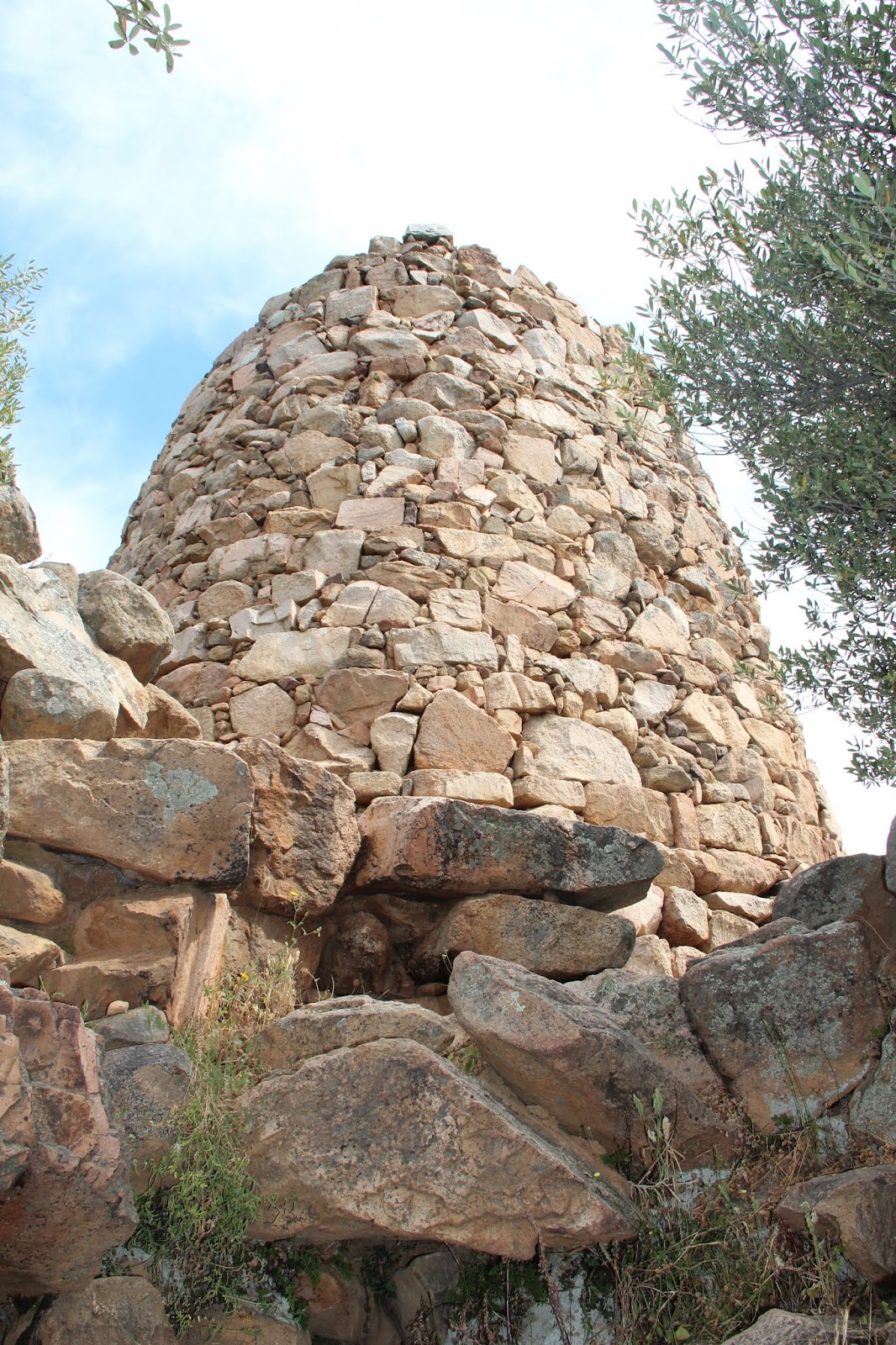
Rocks in the mountains


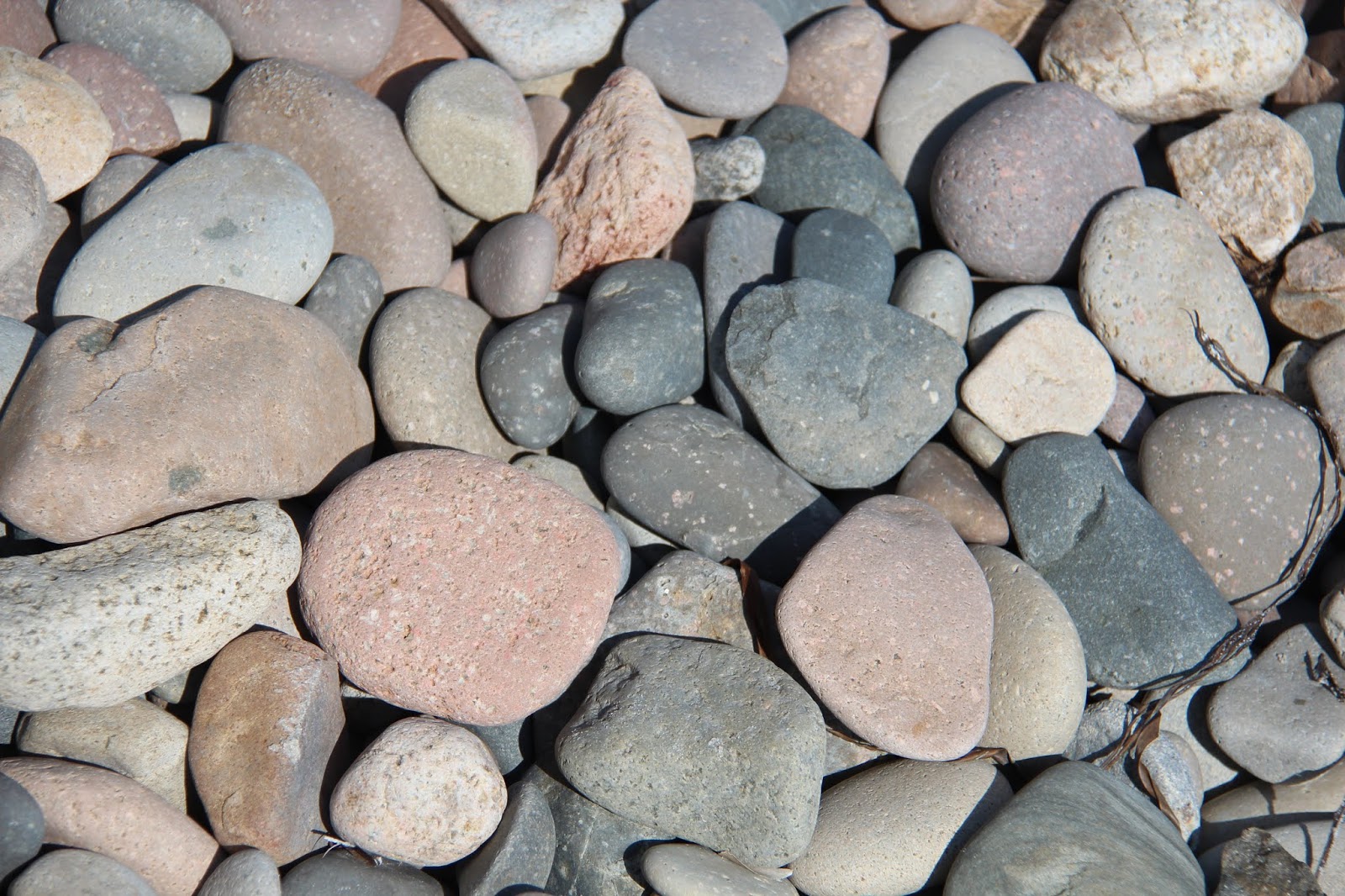
Rocks on the beach


Lying on rocks


Water gouging rocks


Rocks from the land

Living in rocks